It usually happens at night, in the yard, in Lincolnton as anywhere: the dog comes to the door wrong. The smell of a skunking is not a bad odor so much as a chemical event, burnt rubber and onions, strong enough to make your eyes water across the room. What you do in the first half hour decides whether your house smells for a weekend or for a month, so this guide sorts the common advice into what works, what does not, and what depends.
Posh Pups Salon LLC handles the bathing and grooming end of a skunk encounter once the worst is dealt with. The first steps, though, happen at home, before you call anyone, and they start with one rule: keep the dog outside.
Why skunk spray is so hard to remove
Skunk spray is an oily liquid carrying sulfur compounds called thiols, which are the same family of chemicals that make skunks effective and onions pungent. Oil clings to fur and spreads to anything the dog touches: carpets, upholstery, your hands, your clothes. Water alone mostly moves it around, and wetting a skunked coat before treating it can make the smell harder to lift, because the spray spreads across wet fur.
Most dogs take the spray in the face and chest, since they lead with their noses. Check the eyes first. Spray in the eyes stings badly and can cause temporary squinting and tearing. Rinsing eyes gently with clean water or saline is a sensible first aid step, and a dog who keeps pawing at his eyes or whose eyes stay red needs a veterinarian.
The claims, sorted
| Claim | Verdict | Why |
|---|---|---|
| Tomato juice baths remove skunk smell. | Mostly false | Tomato juice masks the odor briefly and tires out your nose, which feels like progress. It does not break down the thiols, and the smell returns as your sense of smell recovers. |
| A peroxide, baking soda, and dish soap wash works. | True, with care | The mixture chemically changes the thiols into compounds that rinse away. It is the standard recipe recommended by vets and humane societies for a fresh skunking. |
| You should bathe the dog in plain water right away. | It depends | Rinsing eyes is urgent and fine. Soaking the whole coat before treatment spreads the oils; apply the treatment to a mostly dry coat first, then rinse. |
| The mix can be stored in a bottle for next time. | False, and risky | The reaction releases gas and can burst a sealed container. Mix it fresh in an open bucket each time and throw out what is left. |
| It is safe on every dog and coat. | It depends | Peroxide can lighten dark coats and dry skin, and the mix must never go in eyes or be swallowed. Dogs with skin wounds or very sensitive skin may need a commercial skunk shampoo or a vet's advice instead. |
| One wash always fixes it. | False | A direct hit usually needs two or three treatments, and a faint smell often returns when the dog gets wet for weeks afterward. |
The wash itself, done right
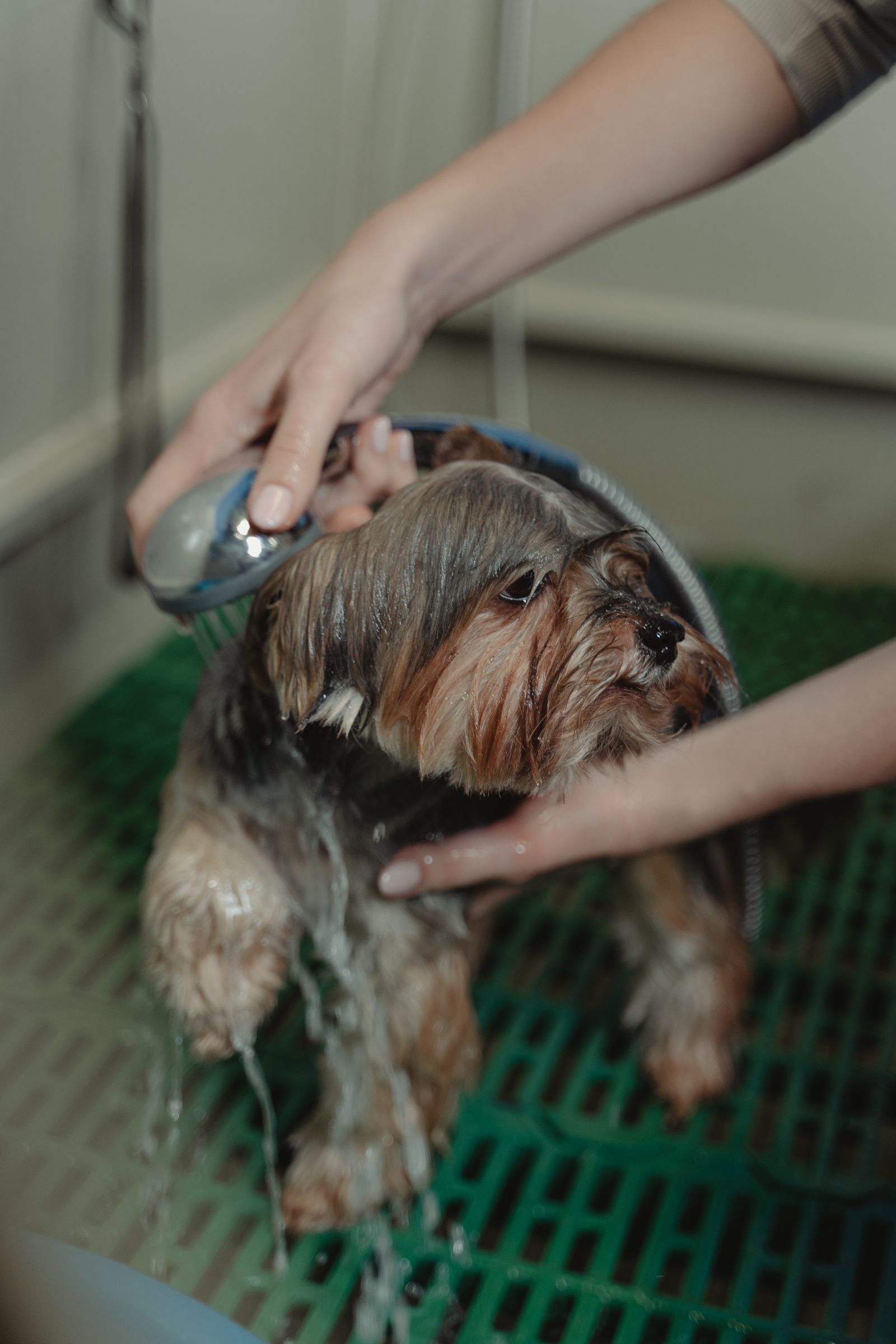
Work outside or in a garage if you can, wearing clothes you can retire and gloves if you have them. Mix one quart of standard three percent hydrogen peroxide, a quarter cup of baking soda, and a teaspoon or two of liquid dish soap in an open bucket. Apply it to the dry coat, working it into the worst areas, the face avoided except for careful wiping with a cloth around, never in, the eyes and mouth. Let it sit about five minutes, no longer, then rinse thoroughly and follow with a normal dog shampoo.
Repeat if the smell is still strong, and expect the face to hold odor longest since it took the direct spray and gets the gentlest treatment. Collars are often a lost cause: leather and fabric absorb the oils deeply, and washing them repeatedly may not save them. Wash your own clothes and any towels separately, with an extra rinse, and keep the dog off upholstery until a sniff test at close range says otherwise.
What not to do
Do not bring the dog inside to wait while you search for supplies. Every surface he brushes becomes a second problem. Do not use bleach or harsh household cleaners on a dog, ever. Do not use the peroxide mix near the eyes, and do not let the dog lick it. And do not spend an hour on tomato juice while the spray sets: the peroxide wash works best fresh, in the first hour or so, before the oils settle deep into the coat.
Puppies, small dogs, and dogs with breathing or skin problems deserve extra caution, and an emergency vet line is the right call if you are unsure. A dog who was sprayed at close range and is drooling heavily, vomiting, or acting weak after a skunk encounter should be seen, since rare reactions and bites from the encounter itself are also possible.
After the crisis: the groomer's part
Once home treatment has done its work, a professional bath helps with the residue, especially for thick or long coats where spray hides deep. Tell the salon honestly that the dog was skunked, even if you think the smell is gone, because wetting the coat during a bath will announce it to the whole room. In Lincolnton's humid summers, a faint skunk note on a wet dog can linger for weeks, fading a little with each wash, and that is normal rather than a sign you did the first wash wrong.
Common questions
How long does skunk smell last on a dog?
With prompt treatment, the strong smell fades within a day or two. A faint odor often returns when the coat gets wet and can linger for several weeks before it is fully gone.
Is the peroxide mixture safe for puppies?
Use extra care with puppies and small dogs, keep the mix out of eyes and mouths, and do not let them swallow it. If you are unsure, call your veterinarian or an emergency line before washing.
Can I use this mixture on my carpet or couch?
No. Peroxide can bleach fabrics and finishes. Keep the dog outside until treated, and clean indoor surfaces with products made for fabrics, testing in a hidden spot first.
Photos in this guide are representative stock images.
← All guides from Posh Pups Salon LLC← Back to Posh Pups Salon LLC