An older dog still needs grooming, but the appointment that suited her at five can quietly become too much at twelve. Standing on a table through a full bath, blow-dry, and detailed cut is athletic work for arthritic joints. Drying takes longer on a thick old coat. Nerves run thinner. In Lincolnton, groomers who see a lot of senior dogs tend to reach the same conclusion: shorter sessions, gentler handling, simpler cuts, and a salon close to home so the whole outing stays small.
Posh Pups Salon LLC offers full-service grooming, bath and brush-outs, and nail and paw care. For a senior dog, the skill is in knowing which of those pieces to use on a given day, and which to skip or split across visits.
What changes in an aging dog
Arthritis is the big one. Hips, elbows, and spines get stiff, and a dog who cannot comfortably stand for a long session may sit down in the tub, lean on the groomer, or tremble from effort rather than fear. Skin gets thinner and heals more slowly, so clipper pressure and brush friction that were fine for years can now irritate. Old dogs also carry more lumps, warts, and skin tags, each one a nick waiting to happen if the groomer has not been warned where they are.
Senses fade too. A dog who hears and sees less startles more easily when touched from behind or lifted unexpectedly. Temperature regulation weakens, so a senior can chill in the bath or overheat under a dryer that a younger dog would shrug off. None of this means grooming stops. It means grooming adapts.
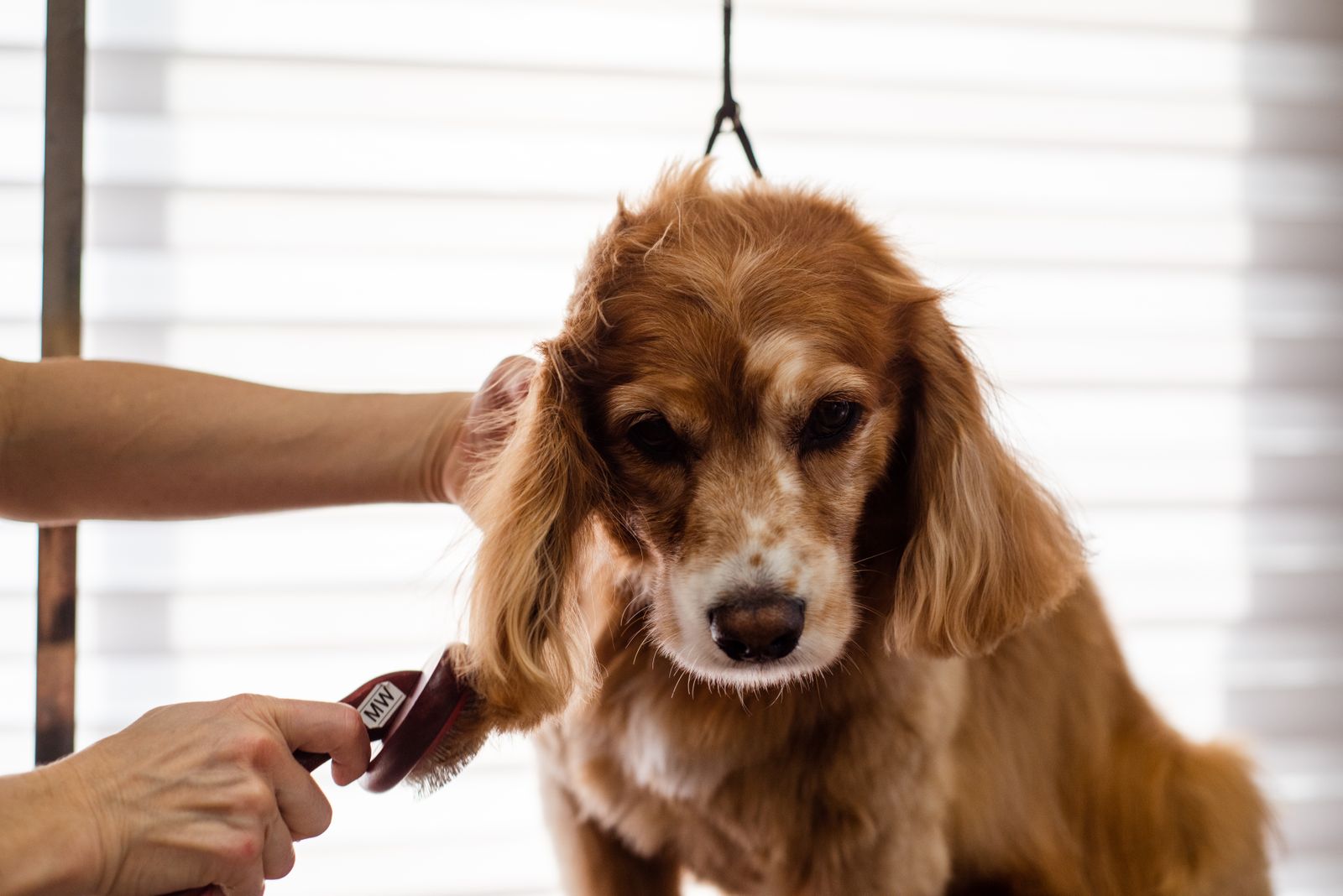
The real options, compared
| Approach | What it involves | Best for | Trade-off |
|---|---|---|---|
| Full groom, comfort version | Bath, dry, and cut in one visit, with rest breaks, a non-slip surface, and a shorter, simpler style. | Healthy seniors who still tolerate a full session with pauses. | Still the longest option; a bad arthritis day may call for stopping halfway. |
| Split appointments | Bath and nails one week, haircut the next, so no single visit runs long. | Dogs who tire, chill, or stress partway through a full groom. | Two trips instead of one, which is why a nearby salon matters. |
| Bath and tidy only | Bath, brush-out, face, feet, and sanitary trim, skipping a full body cut. | Short-coated seniors and dogs between cuts who mainly need to be clean and comfortable. | The coat keeps its length, so home brushing has to carry more of the load. |
| Short comfort clip | One practical length all over, chosen for easy drying and minimal brushing. | Thick or curly coats that mat quickly and exhaust the dog when styled longer. | Less of the classic breed look; comfort wins over appearance. |
| Veterinary grooming | Grooming at a vet clinic, sometimes with sedation, for dogs who cannot be groomed safely awake. | Dogs in pain, dogs who bite from fear or discomfort, and dogs needing medical bathing. | Less styling, more clinical setting; the right call when safety is the issue. |
Comfort details that make the difference
Ask how the salon handles a dog who needs to lie down. Good senior setups include ramps or low tubs so the dog is not lifted high, supportive slings or a second pair of hands for drying, and permission for the dog to sit or rest whenever she needs to. Warm water, a warm room, and drying that does not blast hot air at full force all matter more than any product.
At home, you can help by keeping nails trimmed between grooms so arthritic toes are not pushed further out of line, and by brushing in short sessions on a surface where the dog can lie down. Tell the groomer about new lumps, sore spots, medications, and any place the dog has started guarding. A groomer who knows about the tender left hip will work around it instead of discovering it.
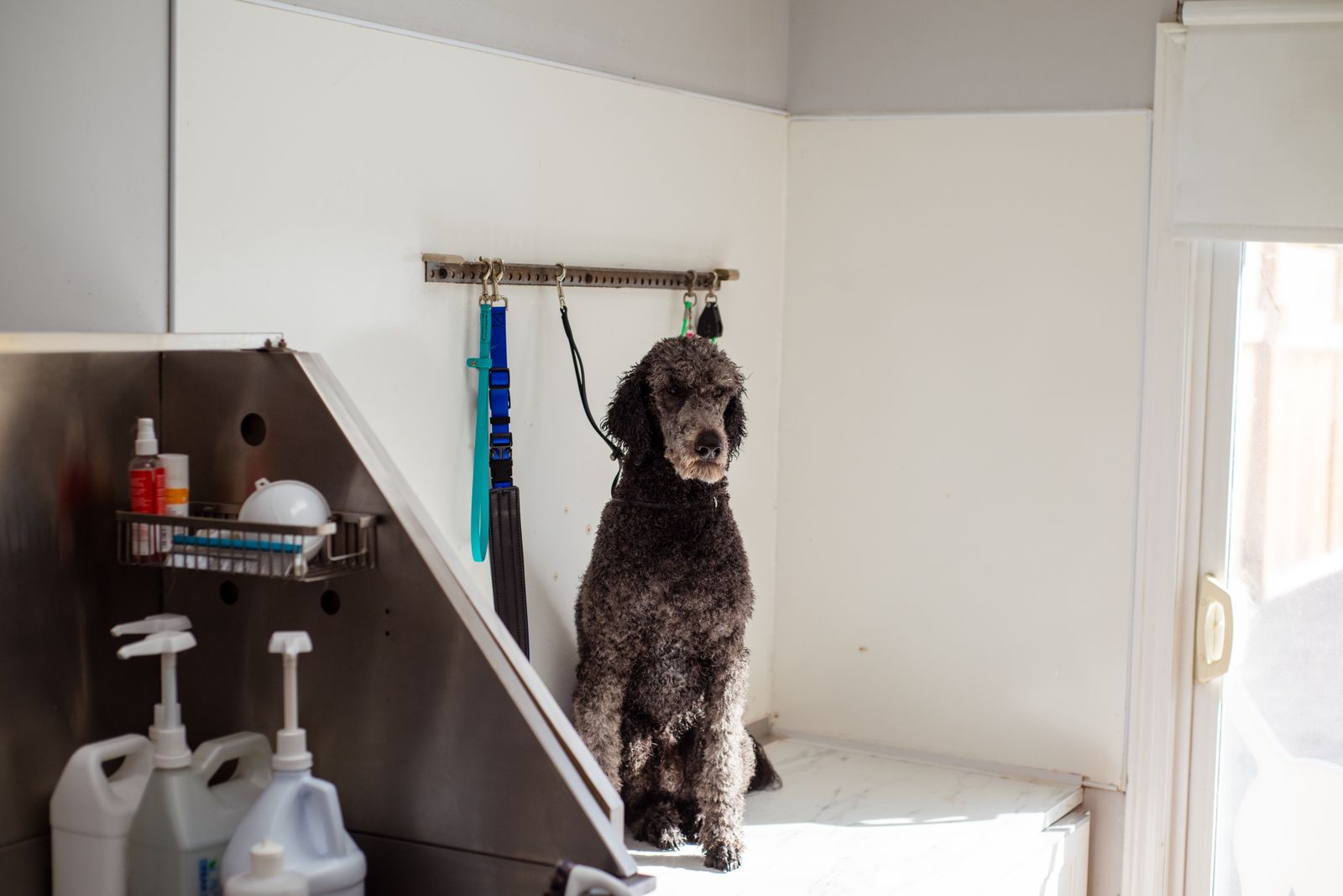
Reading your dog after the appointment
A senior who comes home, eats, and sleeps hard for an evening had a big day but a manageable one. A dog who comes home sore, stiff for two days, unusually clingy, or off her food is telling you the session was too long or too physical. That feedback should change the next booking: split it, shorten the cut, or ask for the comfort version explicitly.
Frequency is part of comfort too. In hot, humid Piedmont summers, a senior with a heavy coat may do better with shorter clips more often than marathon grooms spaced far apart. Regular short visits also keep the dog familiar with the staff and the place, which lowers stress for a dog whose world is shrinking to the routines she knows best.
When grooming uncovers a health question
Groomers sometimes find the lump you missed, notice weight loss under a thick coat, or see skin that looks infected. Take those observations seriously and follow up with your veterinarian. Grooming for a senior is partly hygiene and partly a regular hands-on health check by someone who knows what your dog felt like last month. That continuity is one more reason to stay with a nearby salon that sees her regularly, rather than rotating through whoever has an opening.
Common questions
How short should a senior dog's cut be?
Short enough to dry quickly and resist matting, without shaving so close that thin old skin is exposed to sun and irritation. A practical comfort length, kept consistent, suits most seniors.
Can my arthritic dog stand for a full groom?
Many can with breaks, support, and a shorter style, but the honest test is how she is afterward. If she is sore for days, split the groom into two shorter visits.
What should I tell the groomer before a senior appointment?
Mention arthritis, sore spots, lumps and skin tags, hearing or vision loss, heart or breathing issues, and medications. Specific warnings let the groomer slow down exactly where your dog needs it.
Photos in this guide are representative stock images.
← All guides from Posh Pups Salon LLC← Back to Posh Pups Salon LLC