Five minutes of brushing a few times a week decides whether a grooming appointment in Lincolnton is a pleasant styling session or a negotiation over mats. The catch is that brushing only works when the tool and technique match the coat. A slicker brush that glides over a poodle can skate uselessly across a double coat, and a comb that suits a spaniel does nothing for a doodle's dense curls. This decision guide sorts it by the dog in front of you.
Posh Pups Salon LLC offers bath and brush-outs and de-shedding treatments, and groomers can always tell which dogs get brushed at home. The difference shows up in the coat, the dog's patience on the table, and whether the style you asked for is actually possible.
The two ideas behind all home brushing
First, brush to the skin, not over the top. Most home brushing fails here: the surface looks fluffy while tangles build underneath, exactly where the owner cannot see them. Use one hand to part the coat and the other to brush the layer beneath, working in sections. This is line brushing, and it is slower than a quick once-over, which is why it works.
Second, a comb is the test. After brushing a section, run a metal greyhound-style comb through it. If the comb passes to the skin smoothly, the section is done. If it snags, there is still tangle to work out, gently, from the ends inward. Brushing on a dry coat adds static and breakage; a light mist of water or detangling spray makes the work kinder, especially on drop coats and curls.
Choosing tools and routines by coat type
| Coat type | Main tools | Routine | Mistake to avoid |
|---|---|---|---|
| Curly and woolly (poodles, doodles, bichons) | Slicker brush, metal comb | Line brush in sections two or three times a week; comb-check every section; pay extra attention to armpits, collar line, and behind the ears. | Waiting until the dog looks shaggy. Curls hide mats at the skin until the coat has to be clipped short. |
| Long drop coats (Yorkies, shih tzus, Maltese) | Pin brush, metal comb | Brush in layers every day or two in short sessions; mist lightly first; comb the furnishings on the legs and the beard area where food and water collect. | Using a slicker aggressively, which can scratch skin and snap fine hair. |
| Double coats (retrievers, shepherds, huskies, spitz types) | Slicker brush, undercoat rake, comb | Brush weekly, more during the spring and fall shed; work the rake gently in the direction of growth to lift loose undercoat without cutting topcoat. | Shaving the coat down for summer, which disrupts insulation and regrowth; brushing is the correct fix for a blowing coat. |
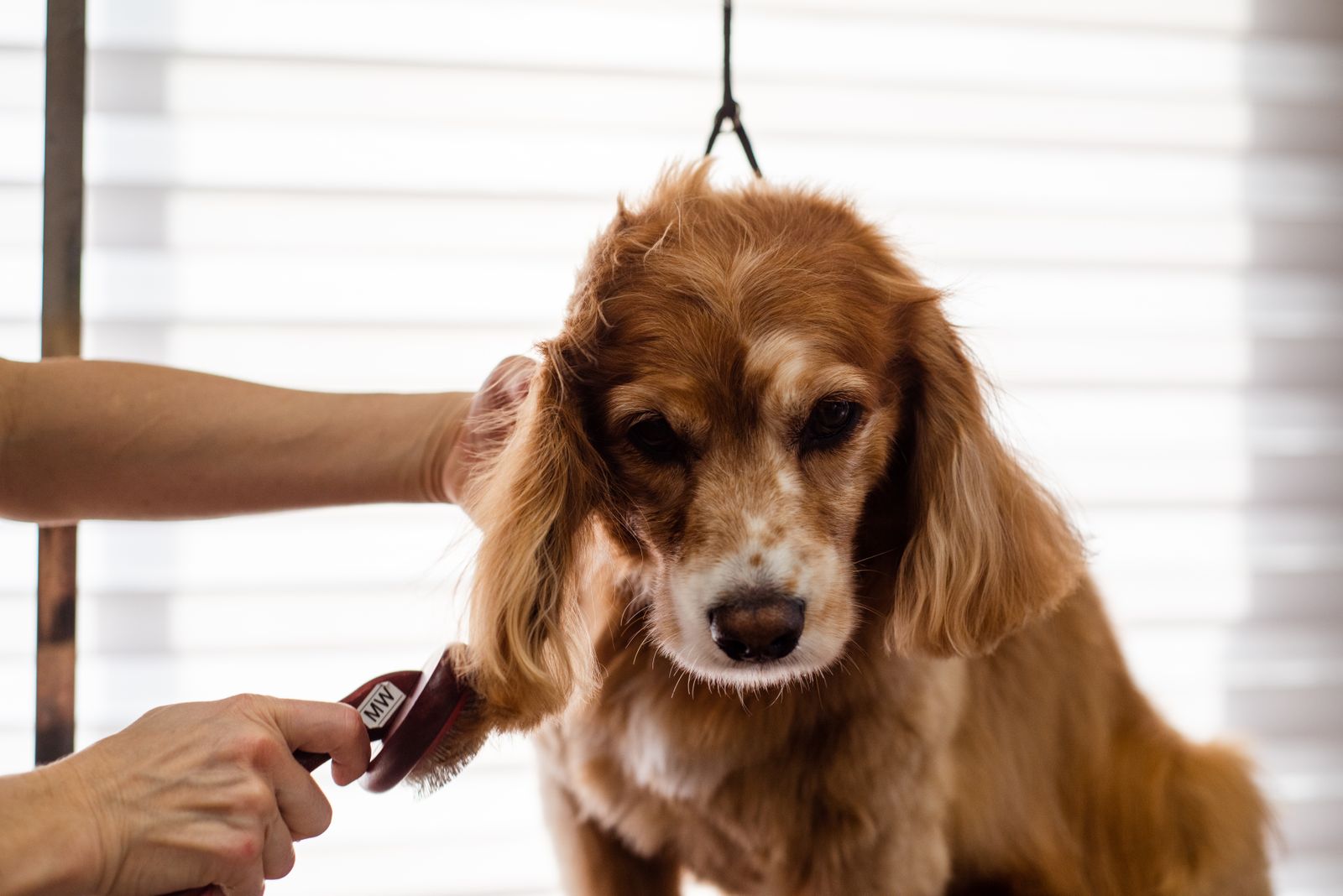
| Spaniel and setter coats | Slicker or pin brush, comb | Brush a few times a week, focusing on ear feathering, chest, armpits, and the backs of the legs where tangles start. | Skipping the ears. Spaniel ear fringe mats fast and is painful to demat once tight. |
| Smooth short coats (beagles, boxers, pointers) | Rubber curry brush, bristle brush | A quick curry in circles once a week loosens dead hair and spreads oils; finish with the bristle brush. | Assuming short hair needs nothing. These dogs shed plenty and benefit from the skin check brushing provides. |
| Wire coats (terriers) | Slicker brush, comb | Brush weekly, comb the beard and leg furnishings, and keep up with professional hand-stripping or clipping schedules. | Letting the beard and legs felt into mats between grooms. |
The five-minute routine that prevents mats
On brushing days, skip the marathon. Take the dog's worst three zones, which for most coated dogs are behind the ears, the armpits and chest, and the rear and tail area, and give each a focused minute or two: mist, line brush, comb-check. Then do a fast pass over the rest. Mats start in friction zones where coat rubs against collars, harnesses, and itself, so covering those spots faithfully matters more than perfect coverage everywhere once a month.
Keep sessions positive on purpose. A young dog who learns that brushing means calm handling and a treat at the end will stand for it for life. Work on a non-slip surface at a comfortable height, stop before the dog is fed up, and never chase a moving dog around the room with a brush. Several short, pleasant sessions beat one long, resented one, every time.
When home brushing is not enough
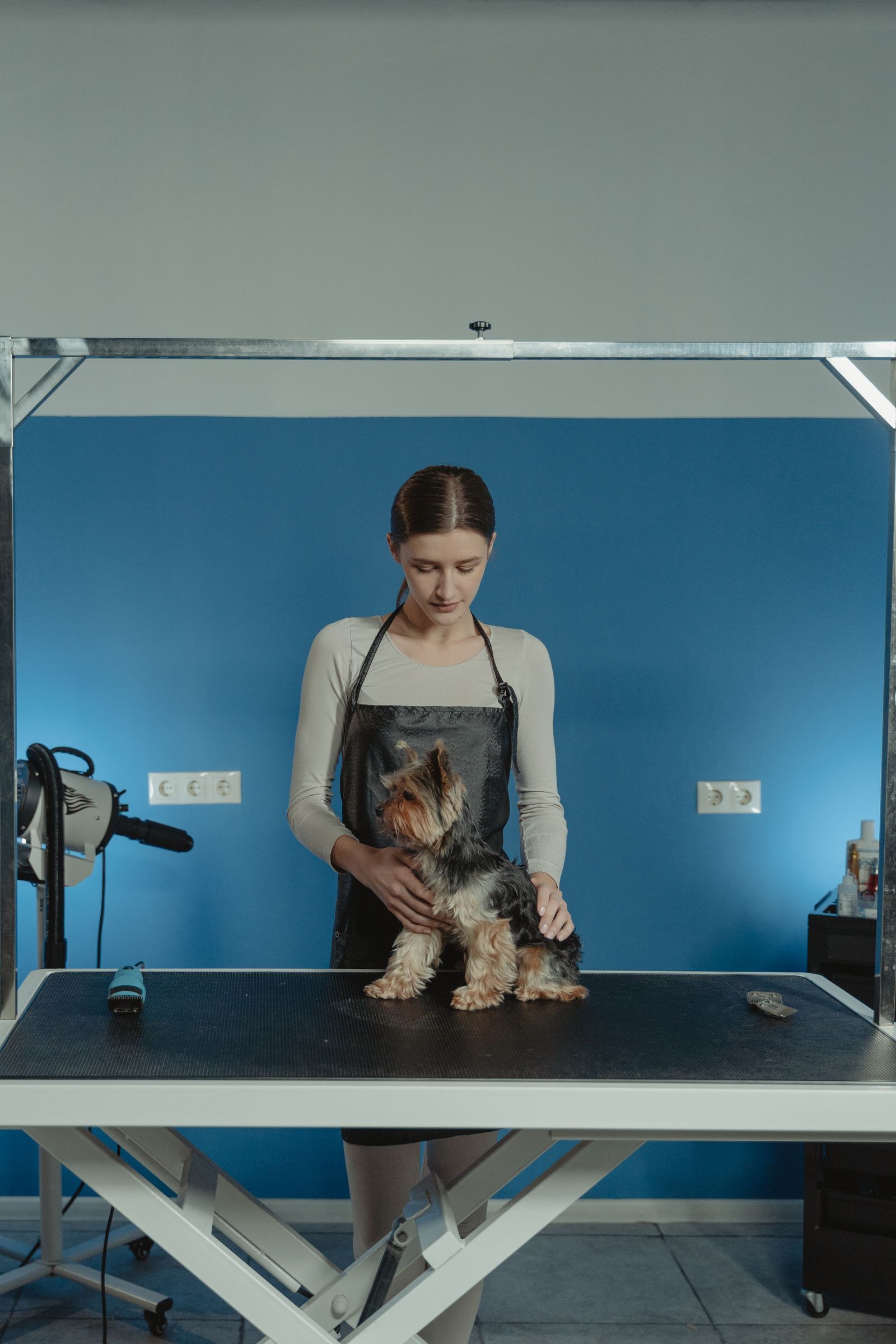
A tight mat against the skin is no longer a home project. Pulling at it hurts, burns the skin with friction, and teaches the dog to dread the brush. Groomers have the tools and the second pair of hands, and even they will sometimes recommend clipping a bad mat out rather than dematting it, because the dog's comfort outranks saving coat length. Bringing a matted dog in early, before the mats spread and tighten, keeps more options open.
Also watch the dog's skin as you brush. Redness, flaking, hot spots, fleas, and new lumps all surface during brushing before they show anywhere else. In Lincolnton's pollen-heavy springs and humid summers, itchy skin escalates quickly, and catching it during a five-minute brush is far easier than treating a full-blown hot spot later. Anything sore, oozing, or fast-changing belongs to the veterinarian, not the brush.
Matching effort to the style you want
The honest bargain of dog grooming is this: the longer and fuller the style, the more home brushing it demands. A doodle kept in a long, fluffy cut needs line brushing several times a week, without exception. A shorter clip forgives a lighter routine. Neither choice is wrong, but they come as a package, and choosing the cut your schedule can actually maintain is the kindest decision for the dog and the groomer both.
Common questions
Which brush should I buy if I can only buy one?
For most coated dogs, a slicker brush plus a metal comb covers the job, with the comb acting as the honest test of whether brushing worked. Smooth-coated dogs do better with a rubber curry brush instead.
How do I know if I am brushing all the way to the skin?
Run a metal comb through the section you just brushed. If it glides to the skin without snagging, you got there. If it catches, tangle remains below the surface.
My dog hates brushing. Where do I start?
Start with one minute, a light mist, and the easiest area of the coat, ending with a treat before the dog gets restless. Build duration over weeks, and let a groomer remove any existing tight mats first so brushing stops hurting.
Photos in this guide are representative stock images.
← All guides from Posh Pups Salon LLC← Back to Posh Pups Salon LLC